
PRP (Platelet-Rich Plasma) for Men’s Sexual Health
PRP stands for Platelet Rich Plasma. Platelet rich plasma is made from a fresh sample of your own blood. The sample is specially prepared to separate out, concentrate and then stimulate the platelets, which are then injected.
Platelets are powerful particles in the blood that normally concentrate at an area of injury and set off a signaling cascade that tells the body to heal or rejuvenate a damaged area. Some of the powerful signaling molecules that platelets make include Platelet-Derived Growth Factor (PDGF) — Responsible for cell growth and division, Vascular Endothelial Growth Factor (VEGF) — Responsible for creation of new blood vessels and capillaries, Transforming Growth Factor (TGF) — Controls cell growth and cell differentiation, and Epidermal Growth Factor (EGF): –Regulating cell growth and differentiation.
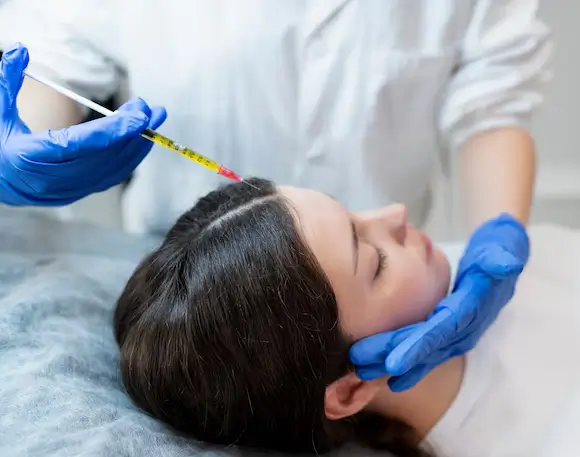
While platelet dose remains an important factor, emerging research suggests that the biological activity of a PRP preparation may also depend on how the product is processed, activated, filtered, and delivered.
For patients considering PRP or other Orthobiologic treatments, not all PRP preparations are created equal.
By optimizing growth factor signaling, timing, and concentrating beneficial plasma proteins and autologous exosomes, the next generation of PRP available at Hawaii Island Stem Cell Therapy and Regenerative Medicine goes beyond our competitors to target the body’s natural repair and regrowth processes in a more biologically sophisticated manner.
Read the full details about our next generation PRP therapy here.
Potential Benefits of PRP for Sexual Function
For those who wish to take advantage of the accumulating evidence, Platelet Rich Plasma injection into the penis may demonstrate improvements in sexual function, including enhancing size, girth, sensitivity, erectile function and even ejaculation control. This therapy can also be used to treat diseases of the penis such as erectile dysfunction, Pyronine’s disease, and Lichen planus.
Allogeneic Allograft: Wharton’s Jelly Birth-Tissue Therapy
An allogeneic allograft is regenerative tissue donated from another individual that is applied to diseased or chronically injured tissues in the recipient.
At Hawaii Island Stem Cell Therapy and Regenerative Medicine, an umbilical cord allograft called Wharton’s Jelly can be used for structural support when injected into male urogenital structures.
How Wharton’s Jelly Is Thought to Support Regeneration
This product is a purified portion of the umbilical cord, also known as the Wharton’s Jelly. Under current FDA regulations, this product can be used to aid in the structural support of male urogenital structures.
Potential Benefits for Men*
- Improve firmness through stimulating collagen and elastin production
- Improve sensitivity
- Improve erectile function through improvement to circulation
- Improve ejaculation control
- Improve disease of the penis such as Peyronie’s disease and lichen planus
Frequently Asked Questions
What is PRP therapy for men’s urogenital health?
PRP (Platelet Rich Plasma) is prepared from a concentrated sample of the patient’s own blood, which is processed to stimulate platelets before being injected. Platelets release growth factors that signal the body to heal and rejuvenate the treated area.
What can PRP injections potentially improve?
As described above, PRP injection into the penis may demonstrate improvements in sexual function for some patients, including size, girth, sensitivity, erectile function, and ejaculation control, and can also be used alongside care for conditions such as erectile dysfunction, Peyronie’s disease, and lichen planus. Your physician can discuss what results may be realistic for your specific case.
What is an allogeneic allograft?
An allogeneic allograft is regenerative tissue donated from another individual—in this case, a purified portion of umbilical cord tissue known as Wharton’s Jelly—that is applied to chronically injured tissue in the recipient.
What does Wharton’s Jelly tissue contain?
These products are generally thought to contain live Mesenchymal Stem Cells (MSC’s), Exosomes (Extracellular Signaling Vesicles), and Polypeptide Enriched Matrix (PEM), which support the body’s natural regeneration processes. However, the FDA prohibits use of Wharton’s Jelly for any of these theoretical constituents.
How does PRP therapy differ from ED medication like Viagra or Cialis?
ED medications work temporarily by increasing blood flow for a few hours after each dose, and their effect ends once the drug clears your system. PRP works on a different principle — delivering growth factors intended to support tissue repair over several weeks — so it isn’t tied to timing a pill around sexual activity. The two approaches work differently rather than one simply replacing the other, and some men use them together.
How many sessions are typically recommended, and how soon might I notice changes?
Protocols described in the published literature generally involve more than one session, spaced weeks to months apart, with some men reporting initial changes within the first few weeks and continued improvement over the following 18 months following treatment. Individual timelines vary, and your physician can outline what to expect for your specific plan.
Why does provider experience matter for this treatment?
Because these procedures are guided by physician judgment rather than a standardized FDA protocol, the training and experience of your provider matters more than it would for a prescription medication. Dr. Lawinski’s background in regenerative and integrative medicine, including his specialized Prolozone and orthobiologic training, informs how these therapies are administered here — ask about his experience with this specific procedure during your consultation.
What should I know about safety before starting urogenital PRP or allograft therapy?
As with any injection procedure, temporary discomfort, swelling, or bruising at the injection site is possible. PRP is prepared using equipment cleared by the FDA for platelet concentration. Wharton’s Jelly and other birth-tissue allografts are regulated separately: the FDA has publicly noted that these products are approved only for structural support, and are not approved for orthopedic, sexual health, or other specific uses, so this therapy is offered based on physician judgment rather than an FDA-approved indication. Because these products come from a donor rather than your own body, they also carry a different risk profile than autologous PRP. Your physician is glad to walk you through what this means for your care during a confidential consultation.
Is confidential men’s regenerative health treatment available on the Big Island?
Yes. Hawaii Island Stem Cell Therapy and Regenerative Medicine, 15-3039 Pahoa Village Rd, Pahoa, HI 96778, offers private, confidential consultations for men throughout Puna, Hilo, Kona, and the greater Big Island — without needing to travel to Oahu.
How do I schedule a confidential consultation?
Contact the clinic directly to schedule a private consultation with Dr. Lawinski, who will review your health history and discuss whether these therapies are appropriate for you.

